

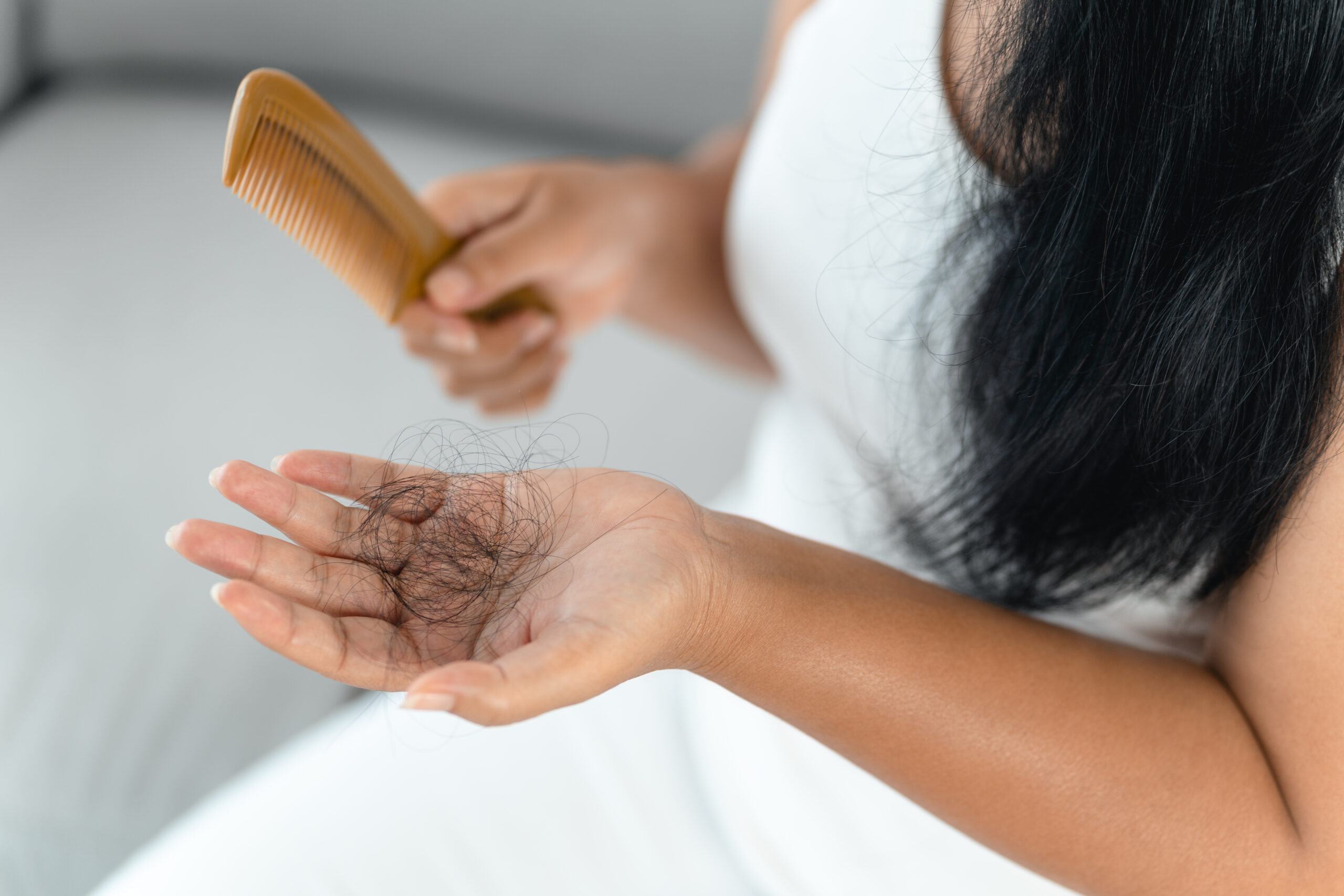
Written by Tabish Mehraj, PhD, Science Writer. This study evaluated the effects of a proprietary Saw palmetto extract, which significantly increased the hair growth counts and improved overall hair density compared to placebo (p < 0.004). A 70.7% decrease in hair shedding was observed in a subgroup of women. Overall, results show statistically significant improvements in hair growth and retention versus placebo.
 Hair loss is a common concern that affects both women and men globally, causing psychological stress. Alopecia, environmental factors, and genetics are common causes of hair loss. The treatment options for hair loss are limited, and currently, the only options are topical or oral minoxidil and hair implant or transplant. For postmenopausal women, the initial treatment is finasteride. Saw palmetto (Serenoa repens) is a plant from the Arecaceae family that has attracted significant attention because of its bioactive compounds. It stimulates follicular health and encourages hair growth by blocking the conversion of testosterone to dihydrotestosterone by being a nonselective inhibitor of 5-alpha reductase Types I and II.
This study, sponsored by Valensa International, supplier of the tested product, was conducted by Glynis Ablon at the Albon Skin and Research Center in the USA, aimed to assess the safety and efficacy of bioactive fatty acids from saw palmetto (SEREVELLE™) for the treatment of hair thinning in healthy adult male and female subjects. This is a preliminary 6-month, randomized, double-blind, placebo-controlled study (this publication describes the 90-day interim results). 60 healthy adult subjects, aged 25 – 65 years, with self-perceived thinning hair were enrolled. Subjects were randomized to receive either active treatment (n = 40) or placebo (n =20), with a 2:1 active-to-placebo ratio. The active treatment consisted of 1 oral dose of 160 mg of saw palmetto extract (SEREVELLE™) daily in a soft capsule. Assessments were conducted at baseline, Day 56 (compliance check and questionnaires), and Day 90. The three primary endpoints of this study are changes in terminal hair counts, vellus hair counts, and total hair counts relative to placebo. Endpoints were evaluated by digital pictures of the head (Day 0, Day 90), trichoscopy imaging (Day 0, Day 90), and a hair-shedding pull test (Day 0, Day 90) was also performed. Additionally, subjective assessments of hair growth were evaluated by both clinicians and patients. A subgroup analysis was performed in non-childbearing-age women (n=15) without a placebo comparison. Safety was evaluated by monitoring the nature, severity, and frequency of treatment-related adverse events. Student’s t-tests were conducted for the statistical analysis.
Key findings/Results
- The active group showed a mean increase of 11.3 terminal hairs in the anterior scalp (p < 0.001) and 12.1 in the posterior scalp (p < 0.001) from baseline.
- Total terminal hair count for the active group represented a 7.8-fold larger retention and growth compared to placebo (p < 0.004).
- Anterior vellus hair count increased by 4.4 for the active group compared to placebo (p<0.015).
- Total hair count (anterior + posterior) increased by 12.8-fold in growth as compared to placebo (p < 0.004). A significant reduction in hair shedding was observed in the active group versus baseline (p < 0.05).
- Analysis of non-childbearing-age women also showed significant improvements in anterior terminal hair counts, anterior total hair count, and anterior vellus hair counts versus baseline. (No placebo comparison performed in this subgroup) Additionally, the author noted a 70.7% reduction in hair shedding (p < 0.05) and a 6.6% increase in follicular units per cm² (p < 0.01).
- Investigator ratings showed that 80% improved hair quality (p < 0.05), and 60% showed increased hair growth (p < 0.05).
- No adverse events were reported in either group, which indicates an excellent safety profile for the SEREVELLE™.
This study has several methodological strengths, including being a randomized, double-blind, placebo-controlled trial. The inclusion of both male and female subjects enhances the generalizability of the results to a broader population experiencing hair loss. The use of objective measures such as trichoscopy, follicular units, hair width, and the hair shedding pull test provides robust quantitative data.
Despite its strengths, the study has several limitations, including the fact that the manufacturer of the product tested sponsored the study. Long-term safety and efficacy beyond 3 months are not yet fully established. A relatively small sample size (n = 60 total, with n = 40 in the active group and n = 20 in the placebo group) may limit generalization of the results to the general population. . The investigator ratings and subject questionnaires were subjective and can be influenced by participant expectations, despite the double-blind design. There was no control group for the subgroup of non-childbearing women. This study did not establish the specific mechanisms of action of the Serenoa repens extract in detail beyond its known 5-alpha reductase inhibitory activity.
The preliminary 90-day results from this randomized, double-blind, placebo-controlled study show that daily oral administration of a proprietary bioactive fatty acids extract from saw palmetto (SEREVELLE™) safely and effectively promotes hair growth and reduces hair shedding in adult men and women. Significant improvements were noted in total hair counts. While these preliminary results look promising, further data from the full 6-month study are needed to confirm long-term safety and efficacy. The study provides strong evidence for SEREVELLE™ as a potential option for people seeking to address hair loss, and it is an effective and safe alternative to conventional options.
Click here to read the full text study.
Posted May 8, 2026.
Dr. Tabish Mehraj is a pharmaceutical scientist with expertise in pharmaceutics, drug delivery, and formulation development. She earned her PhD in Pharmaceutical Sciences from the University of Mississippi, where her research focused on the formulation, optimization, and characterization of lipid-based nanocarriers for targeted liver delivery of antimalarial therapeutics. Dr. Mehraj has also served as an ORISE Fellow at the U.S. Food and Drug Administration (FDA), where she evaluated the effects of formulation and process design on the quality and performance of intravaginal drug delivery systems and developed bio-relevant in vitro drug release testing methods. She has teaching experience in pharmaceutical and life sciences courses and has authored peer-reviewed publications, book chapters, and conference presentations. Dr. Mehraj is an active member of the American Association of Pharmaceutical Scientists and has been recognized by honor societies including Rho Chi and Gamma Beta Phi.
References:
- Ablon, G. (2025). The Safety and Efficacy of a Proprietary Bioactive Fatty Acids Extract From Saw Palmetto (Serenoa repens) for Promoting Hair Growth and Reducing Hair Loss in Adults With Self‐Perceived Thinning Hair: 90‐Day Results. Journal of Cosmetic Dermatology, 24(12), e70585.


Comments (0)