

Written by Taylor Woosley, Science Writer. Findings of a meta-analysis including 26 RCTs featuring 668 healthy participants shows that RR supplementation improved endurance performance, specifically VO2max (p<0.01), TTE (p<0.05), and TTP (p<0.05), reduced muscle damage (CK; p<0.01), while also improving oxidative stress response and antioxidant capacity.
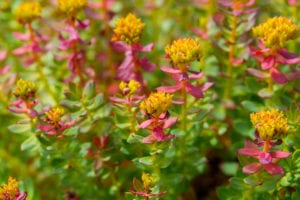 Rhodiola rosea (RR) is a perennial herb that acts as an adaptogen, meaning that RR can support resistance to various types of stress1. The adaptogenic actions of RR are mainly attributed to the phenolic glycosides, salidroside and rosavin, found in the root2. Research focused on RR suggests that it may benefit athletes engaging in high performance activity due to its anti-hypoxia and anti-fatigue properties3.
One possible method of physical performance enhancement is RR’s ability to upregulate acute catecholamine (norepinephrine and epinephrine) levels, which play a key role in the stress response4. Salidroside is shown to reduce oxidative stress and cytokine signaling, while supporting mitochondrial biogenesis and stability5. Furthermore, salidroside may enhance oxygen utilization and alleviate exercise-induced muscle damage6.
Wang et al. conducted a meta-analysis to analyze the impact of RR administration on physical performance and endurance-related biomarkers. Study inclusion consisted of randomized controlled trials (RCTs) with healthy participants (aged 18-50 years), who had no history of chronic disease, using RR as the intervention, with a control for comparison. Primary outcomes included endurance performance (measured by time to exhaustion (TTE), time trial performance (TTP), and maximum oxygen volume (VO2max)) and other related physiological performance biomarkers such as muscle damage and oxidative stress markers.
26 RCTs were included in the final meta-analysis, featuring 668 healthy participants (mean age 22.0 ± 10.7 years). 15 studies solely included male participants, 3 focused on female subjects, and 8 had a combination of male and female participants. Training durations were between 3 days and 3 months (mean duration 33 days), with a follow up assessment ranging from 15 min post-exercise to 24-hr follow up to measure acute and extended recovery phases. 13 RCTs included trained subjects and the other 13 focused on untrained participants, with exercise involving aerobic and endurance training.
Significant findings of the meta-analysis are as follows:
- RR supplementation significantly improved VO2max (11 studies; p<0.01), TTE (7 studies; p<0.05), and TTP (5 studies; p<0.05) compared to placebo.
- RR administration significantly reduced creatine kinase (CK) levels (9 studies; p<0.01), indicating reduced muscle damage.
- RR supplementation significantly improved TAC (6 studies; p<0.05) and SOD levels (7 studies; p<0.01), while significantly reducing MDA levels (6 studies; p<0.001), resulting in improved oxidative stress response and antioxidant activity.
- Subgroup analyses were performed to assess the effects of daily RR dosage, training length, follow-up time points, training status, and comparator type, on intervention outcomes. Subgroup analysis results showcased a significant influence of RR’s impact on VO2max based on daily dosage, with doses exceeding 600 mg/d leading to more significant improvements compared to lower amounts.
Meta-analysis findings suggest that Rhodiola rosea significantly improves physical endurance performance and metabolic efficiency biomarkers in healthy participants compared to placebo, with higher dosages leading to improved results. Meta-analysis limitations include the lack of multiple analyses featuring 10 studies or more and the lack of additional biomarkers including glutathione peroxidase. Future meta-analyses including larger sample sizes, increased biomarkers assessed, and standardized protocol reporting are necessary to better comprehend the benefits of RR for physical endurance performance.
Source: Wang, Xiaolin, Xuezhen Yang, Zhendong Gao, Jin Zeng, and Yutong Liu. “The effect of Rhodiola rosea supplementation on endurance performance and related biomarkers: a systematic review and meta-analysis.” Frontiers in Nutrition 12 (2025): 1645346.
© 2025 Wang, Yang, Gao, Zeng and Liu. This is an open-access article distributed under the terms of the Creative Commons Attribution
License (CC BY)
Click here to read the full text study.
Posted January 23, 2026.
Taylor Woosley studied biology at Purdue University before becoming a 2016 graduate of Columbia College Chicago with a major in Writing. She currently resides in Glen Ellyn, IL.
References:
- Williams TD, Langley HN, Roberson CC, Rogers RR, Ballmann CG. Effects of Short-Term Golden Root Extract (Rhodiola rosea) Supplementation on Resistance Exercise Performance. Int J Environ Res Public Health. Jun 29 2021;18(13)doi:10.3390/ijerph18136953
- Tinsley GM, Jagim AR, Potter GDM, Garner D, Galpin AJ. Rhodiola rosea as an adaptogen to enhance exercise performance: a review of the literature. Br J Nutr. Feb 14 2024;131(3):461–473. doi:10.1017/s0007114523001988
- Wang J, Zhao H, Yu L, et al. The Effect of Short-Term Rhodiola rosea Supplementation on Simulated Game Time, Perceived Fatigue, and Performance in Basketball Players. Nutrients. Nov 25 2025;17(23)doi:10.3390/nu17233694
- Marcos-Frutos D, Leban Ž, Li Z, et al. The Impact of Rhodiola Rosea Extract on Strength Performance in Alternative Bench-Press and Bench-Pull Exercises Under Resting and Mental Fatigue Conditions: A Randomized, Triple-Blinded, Placebo-Controlled, Crossover Trial. Nutrients. Mar 7 2025;17(6)doi:10.3390/nu17060940
- Koozehchian MS, Newton AT, Mabrey G, Bonness FM, Rafajlovska R, Naderi A. Dose-Response Effects of Short-Term Rhodiola rosea (Golden Root Extract) Supplementation on Anaerobic Exercise Performance and Cognitive Function in Resistance-Trained Athletes: A Randomized, Crossover, Double-Blind, and Placebo-Controlled Study. Nutrients. Nov 28 2025;17(23)doi:10.3390/nu17233736
- Schwarz NA, Stratton MT, Colquhoun RJ, et al. Salidroside and exercise performance in healthy active young adults – an exploratory, randomized, double-blind, placebo-controlled study. J Int Soc Sports Nutr. Dec 2024;21(1):2433744. doi:10.1080/15502783.2024.2433744


Comments (0)