

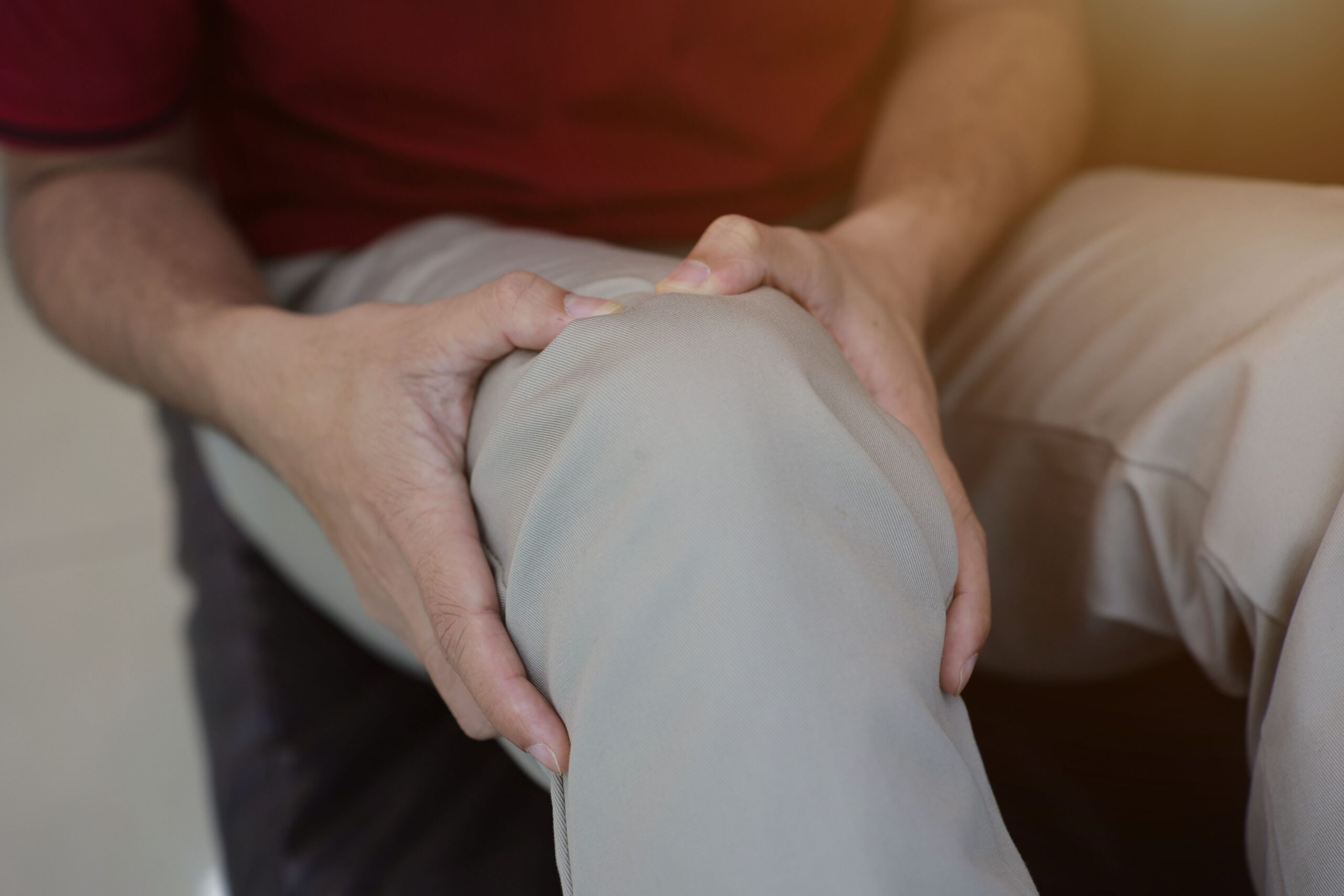
Written by Tabish Mehraj, PhD. In this study, 117 participants were assessed, and both inulin supplementation and physiotherapy-supported exercise significantly reduced knee pain, with no synergistic effect. Inulin also improved pain sensitivity and grip strength and increased butyrate and GLP-1 levels, while physiotherapy improved mobility and lower-body function.
 Knee osteoarthritis (OA) is a common cause of persistent pain, stiffness, and impaired physical function. Although exercise is an established non-drug approach for managing knee OA, dietary strategies that may influence pain processing have received considerably less attention. Recent studies suggest that the gut microbiome may affect pain perception, inflammation, and pain sensitivity through the gut–brain and gut–muscle axes. Inulin, a prebiotic fiber, may alter the gut microbiome and increase metabolite production, including short-chain fatty acids (SCFAs). Researchers therefore investigated whether an inulin supplement could decrease knee OA pain, either on its own or when combined with physiotherapy-supported exercise (PSE).
In this 6-week, 2 × 2 factorial randomized controlled trial, which included 136 randomized community-dwelling adults with knee OA, 117 completed both baseline and follow-up assessments. Participants aged 67.5 years, with a mean BMI of 29.5 kg/m², were allocated to one of four groups: 20 g/day of inulin, digital PSE, a combination of inulin and PSE, or 10 g/day of maltodextrin as the placebo. Parameters assessed were knee pain measured using a 0–10 Numerical Rating Scale (NRS). Other outcomes were walking and lower-body function, grip strength, pressure pain thresholds (PPT), temporal summation (TS), and exploratory measurements of serum SCFAs and glucagon-like peptide-1 (GLP-1).
Results/Key Findings
- Inulin reduced pain by 1.11 points (95% CI −2.18 to −0.04; P=0.045), while PSE reduced pain by 1.55 points (95% CI −2.52 to −0.58; P=0.002) versus placebo.
- PSE improved timed up-and-go (P=0.02) and 30-second chair-stand performance (P=0.0004).
- Inulin improved grip strength (P=0.002), pressure pain thresholds (P=0.009), and temporal summation (P=0.025).
- Inulin increased butyrate (P=0.0248) and GLP-1 (P=0.0109); higher GLP-1 was associated with better grip strength and KOOS function.
- Dropout was significantly lower with inulin than PSE (3.6% vs. 21%; P<0.01), with adherence of 88% and 84%, respectively.
The study has several strengths. Its randomized factorial design allowed researchers to examine two interventions within the same trial. Participants were successfully blinded to the nutritional intervention, outcome assessors were blinded, and the study included both subjective pain measures and objective functional and quantitative sensory testing. The use of multiple outcomes also allowed researchers to distinguish improvements in pain from changes in pain sensitivity and physical function. In addition, an intention-to-treat sensitivity analysis produced results consistent with the per-protocol findings. However, several limitations should be considered. The PSE intervention could not be blinded, creating the possibility of expectancy effects, particularly for self-reported pain. Dropout was substantially higher in the PSE groups, requiring targeted recruitment that altered the originally planned allocation and introduced potential temporal confounding. Although sensitivity analyses yielded similar results, residual confounding cannot be completely ruled out. The intervention lasted only six weeks, which may be too short to capture the longer-term effects of exercise or prebiotic supplementation. Furthermore, there are no established minimum clinically important differences for PPT and TS, making the clinical significance of these sensory improvements uncertain. The GLP-1 findings were exploratory, and the absence of a relationship between serum SCFAs and pain may partly reflect limitations of measuring circulating rather than gut SCFAs.
Overall, the study suggests that both inulin supplementation and digital physiotherapy-supported exercise may meaningfully reduce knee OA pain. At the same time, their effects may differ: PSE appears particularly beneficial for physical function, whereas inulin may additionally influence pain sensitivity and grip strength. The findings provide preliminary human evidence for a possible role of prebiotic nutrition in pain modulation, but longer and better-powered trials are needed to confirm these effects and clarify the underlying mechanisms.
Click here to read the full text study.
Posted September 28, 2026.
Dr. Tabish Mehraj is a pharmaceutical scientist with expertise in pharmaceutics, drug delivery, and formulation development. She earned her PhD in Pharmaceutical Sciences from the University of Mississippi, where her research focused on the formulation, optimization, and characterization of lipid-based nanocarriers for targeted liver delivery of antimalarial therapeutics. Dr. Mehraj has also served as an ORISE Fellow at the U.S. Food and Drug Administration (FDA), where she evaluated the effects of formulation and process design on the quality and performance of intravaginal drug delivery systems and developed bio-relevant in vitro drug release testing methods. She has teaching experience in pharmaceutical and life sciences courses and has authored peer-reviewed publications, book chapters, and conference presentations. Dr. Mehraj is an active member of the American Association of Pharmaceutical Scientists and has been recognized by honor societies including Rho Chi and Gamma Beta Phi.
Reference:
- Kouraki, A., Franks, S., Vijay, A., Kurien, T., Taylor, M. A., Smith, S. L., … & Valdes, A. M. (2026). Effect of prebiotic supplementation with and without physiotherapy on pain and pain sensitivity in people with knee osteoarthritis. Nutrients, 18(5), 714.


Comments (0)