

Written by Chrystal Moulton, Science Writer. Results from this study demonstrated that the WS-35 formulation (480 mg standardized to 35% withanolide glycosides and delivering 185 mg total withanolides) achieved the highest bioavailability of withanolide A, withaferin A, withanoside IV, and total withanolides among the four tested extracts.
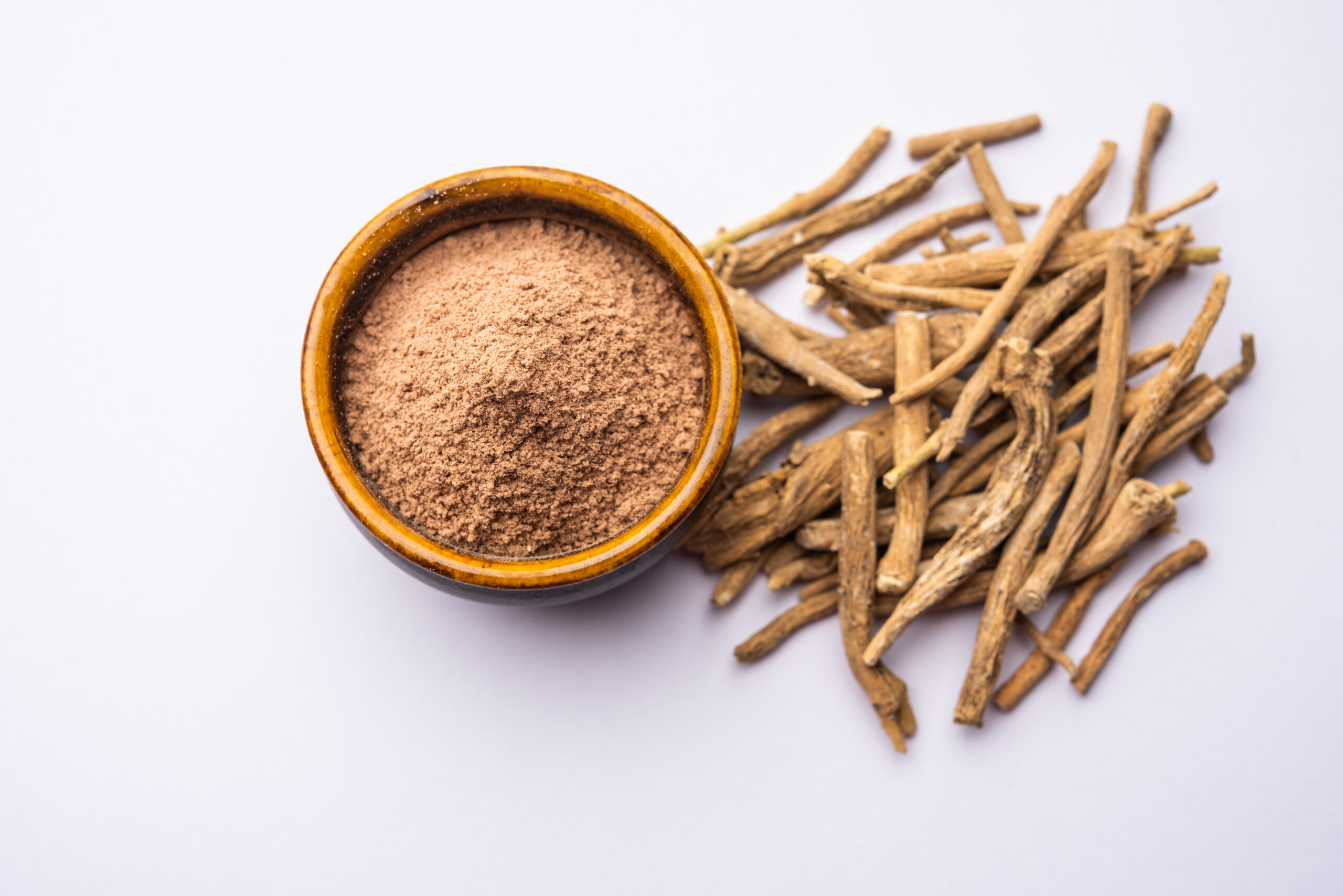
 Ashwagandha is a well-known adaptogenic herb used in traditional ayurvedic medicine to improve cognitive function, manage stress, and improve mood.1,2 Pharmacological studies have also shown that ashwagandha exhibits anti-inflammatory, immunomodulatory, anti-neurodegenerative, and antioxidant effects.3,4 However, there does not exist a standardized extract for ashwagandha. Furthermore, manufacturers utilize varying parts of the plant, analytical, and extraction methods, which affect the concentration of withanolides (the active component) in the final product. In the current study, researchers conducted a pharmacokinetic study investigating the bioavailability of 4 commercially available extracts.5
This study was designed as a randomized, crossover, double-blind, clinical trial. Eligible participants receive a singular dose of 1 out of 4 extracts followed by a 7-day washout period. After the 7-day washout period, the participant was then given a singular dose of another of the 4 commercially available extracts followed by a 7-day washout period. This process was then repeated until each participant received all 4 extracts. Both participants and researchers were unaware of the extracts that were being provided at each time interval. Eligible participants were:
- Healthy female or male between 18-45 years old
- BMI = 18.5 – 30 kg/m2
- Weighing 50kg or more
- Negative result for drug or alcohol use (Urine screen & alcohol breath test)
- Normal chest x-ray, 12-lead ECG, vitals and physical examination
- No significant or chronic diseases within medical history
- No sensitivity to ashwagandha
Each dose was designed to deliver 185mg of withanolides at 4 different concentrations of withanolide glycosides per product specifications. The four formulations of withanolide extracts tested were:
- 5% withanolide glycosides standardization [WS-2.5] (7400mg)
- 5% withanolide glycosides standardization [WS-5] (3700mg)
- 10% withanolide glycosides standardization [WS-10] (1800mg)
- 35% withanolide glycosides standardization [WS-35] (480mg)
After fasting overnight, participants were provided with their assigned extract. Blood samples were collected at baseline, and 16 additional time points post administration [15min, 30min, 45min, 1h, 1.5h, 2h, 2.5h, 3h, 3.5h, 4h, 5h, 6h, 9h, 12h, 16h, and 24h]. Area under the curve (AUC), elimination rate constant (Ke), half-life, and time at peak concentration (Tmax) were assessed. Researchers assessed the concentration of withanolide A, withaferin A, withanoside IV, and total withanosides at each time point. Safety evaluations were conducted throughout the trial.
A total of 16 eligible adult participants were included in this pharmacokinetic study. The AUC for 35% withanolide glycosides extract (WS-35) was significantly higher than all the formulations (P<0.001). Additionally, maximum concentration and half-life of WS-35 was significantly better than the other 3 formulations (P<0.001). Mean residence time which indicates average time the molecules are present in the body was significantly higher than all 3 formulations (P<0.001). WS-35 demonstrated superior pharmacokinetic performance and more consistent systemic exposure compared with the other formulations. WS-35 also contained significantly greater concentrations of withanoside A, withaferin A, withanoside IV, and total withanosides compared to the other 3 formulations. Withanoside IV was not detected in WS-5 and WS-10. No severe adverse effects were observed. All four formulations were well tolerated.
Results from this study demonstrated that the WS-35 formulation (480 mg standardized to 35% withanolide glycosides and delivering 185 mg total withanolides) achieved the highest bioavailability of withanolide A, withaferin A, withanoside IV, and total withanolides among the four tested extracts. WS-35 also exhibited a longer half-life and greater mean residence time, indicating prolonged systemic exposure to these bioactive compounds. However, whether these pharmacokinetic advantages translate into greater clinical efficacy remains unknown and warrants further investigation in appropriately designed clinical trials.
Source: Rathi, Priyank, and Se-Kwon Kim. “Randomized, double-blind, crossover study comparing the bioavailability of 4 Ashwagandha (Withania somnifera (L.) Dunal) extracts in healthy adults under fasting condition.” Current Therapeutic Research 103 (2025): 100805.
Click here to read the full text study.
© 2025 The Authors. Published by Elsevier Inc. This is an open access article under the CC BY license
Posted October 13, 2026.
Chrystal is a 2008 graduate of the University of Illinois at Chicago. She graduated with a bachelor’s in psychology with a focus on premedical studies and is a licensed project manager. She currently resides in Chicago.
References:
- Muralidhara M. Exploring the neuro-ameliorative propensity of Withania somnifera—Indian ginseng. Ayurvedic Herbal Preparations in Neurological Disorders. Elsevier; 2023:165–189.
- Priyanka G, Anil Kumar B, Lakshman M, Manvitha V, Kala Kumar B. Adaptogenic and Immunomodulatory Activity of Ashwagandha Root Extract: An Experimental Study in an Equine Model. Frontiers in veterinary science. 2020;7:541112. doi:10.3389/fvets.2020.541112
- Tamoli S, Gokarn V, Ibrahim M, Ahmad S. Comparative investigation of Ashwagandha FMB extract and standardized extract for their antioxidant, anti-inflammatory and immunomodulatory potential. Ann Phytomedicine An Int J. 2022;11(1):405–412.
- Tewari D, Chander V, Dhyani A, et al. Withania somnifera (L.) Dunal: Phytochemistry, structure-activity relationship, and anticancer potential. Phytomedicine. Apr 2022;98:153949. doi:10.1016/j.phymed.2022.153949
- Rathi P, Kim SK. Randomized, Double-Blind, Crossover Study Comparing the Bioavailability of 4 Ashwagandha (Withania somnifera (L.) Dunal) Extracts in Healthy Adults Under Fasting Condition. Curr Ther Res Clin Exp. 2025;103:100805. doi:10.1016/j.curtheres.2025.100805


Comments (0)